Please upgrade your browser to the latest version to view our website

Accelerating Kazakhstan’s Water Security Agenda: Metito to develop Kenderli desalination plant with a capacity of 50,000 m3/day

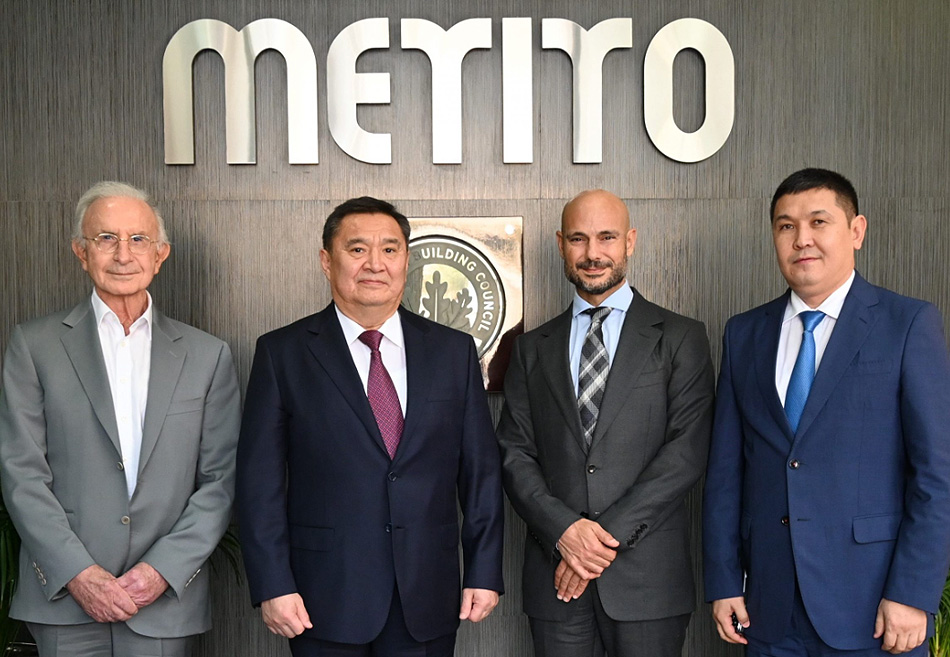
A consortium of Metito, a global provider of intelligent water management solutions, SMK Atameken LLP, Ak Jol Kurylys LLP, and Caspian HES Consulting LLP, has been awarded the contract for the development of a 50,000 m3/day desalination plant in the Mangystau region by Ak Su KMG LLP, a part of the KazMunayGaz holding. Located on Kazakhstan’s Caspian coast, Mangystau region, Kenderli Seawater Reverse Osmosis (SWRO) Desalination Project will serve the Zhanaozen city, as well as a future resort development at Kenderli Bay.

Kazakhstan’s water supply could experience substantial deficits by 2040, projected at 50% of its required volume, attributed to climate change alongside population growth, rapid urbanization, and industrialization. The Kenderli SWRO project is in line with Kazakhstan’s President Kassym-Jomart Tokayev’s recommendations to address the region’s water supply concerns through the accelerated introduction of water-saving technologies, a directive he reinforced at the 28th UNFCCC Conference of the Parties (COP28) which took place in Dubai in November 2023.

Kenderli SWRO will leverage Metito’s high-value engineering capabilities and will implement innovative and efficient technologies for optimized operations. Upon completion, the facility will have the capacity to provide potable water needs for the Zhanaozen city and Kenderli recreation area. Presently, the city sources its potable water from the Kigach River (Atyrau region) along the pipeline of around 1000 km in length, serving communities in Mangystau region.

“Water security is essential for the sustainable development of any economy. While the Kenderli SWRO will serve thousands of residents with potable water, it will also generate a positive ripple effect on the growth of tourism, entrepreneurship, and agriculture in the area, highlighting the importance and grave impact of such projects not just on the local communities, but on wider economic growth. This project also marks Metito’s second project in the country and is in line with the company’s strategic expansion plans in Central Asia,” commented Talal Ghandour, Chief Executive Officer, Metito Overseas.

The construction is set to begin in March 2024, up to 15 months timeline for project delivery.

Metito featured in GWI: Unlocking Private Sector Opportunities

We are pleased to share a featured article from Global Water Intelligence (GWI), highlighting Metito Utilities’ pioneering role in advancing private sector participation in Central Asia’s water and wastewater infrastructure.

The article explores recent milestones in Kazakhstan and Uzbekistan, including Metito Utilities’ agreement to develop Kazakhstan’s first full public-private partnership (PPP) wastewater project in Kokshetau, and the anticipated financial close of the Namangan PPP project in Uzbekistan.

In an interview with GWI, Rami Ghandour, CEO of Metito Utilities, shares insights into Metito Utilities long-term vision for sustainable water investment in emerging markets and its commitment to delivering impact-driven, resilient infrastructure solutions.

The full article, published by GWI on 18 January 2024, is shared below with permission and without edits.


Private water opportunities gather pace in Central Asia


Recent agreements in Kazakhstan and Uzbekistan reveal a market keen for new methods to build its way out of a Soviet past. GWI Asia editor Edward Cullinane investigates.

Published: 18 January 2024

An agreement at the end of last month by water and wastewater specialist Metito to finance and deliver a wastewater treatment plant in Kazakhstan reflects a rising tide of interest from private water companies in a growing set of opportunities in Central Asia.

On 27 December, Metito concluded a heads of agreement with the Kazakhstan Investment Development Fund and other local and national groups to deliver Kazakhstan’s first full public-private partnership (PPP) agreement in the water/wastewater sphere, involving the construction of a 50,000m3/d wastewater treatment plant in the city of Kokshetau.


Investing in water in Central Asia


Kokshetau, in northern Kazakhstan, is set to be the site of a privately financed wastewater treatment plant developed by Metito. The company says it could provide a model for more water PPP projects in Central Asia.

Meanwhile, the 100,000m3/d privately financed Namangan wastewater treatment project in Uzbekistan, secured by Metito at the end of 2021, is understood to be on the cusp of financial close. Representatives at both Metito and the European Bank for Reconstruction and Development (which is supporting the Namangan project) say they expect further initiatives to follow as the Uzbek government seeks new models to deliver much-needed infrastructure projects. The EBRD in December approved a $10 million fund to establish a project development facility in Uzbekistan in anticipation of further future PPPs.


A steppe change in procurement 

There is a relatively extensive pipeline of water and wastewater infrastructure projects in Kazakhstan and Uzbekistan, but progress has often been slow. After breakthroughs on PPPs in Tashkent and Namangan, investors are now predicting a greater use of private finance for future projects. 


Project Country Capacity* Cost ($m) PPP Status
Namangan WWTP Uzbekistan 100,000 90 yes Pre-financial close
Tashkent WWTP Uzbekistan 1,500,000 tbc yes Pre-financial close
Surkhandarya PPP Uzbekistan n/a 500 yes In negotiations
Kendirli desalination Kazakhstan 50,000 251 no Awarded Q4 ’23
Kokshetau WWTP Kazakhstan 50,000 tbc yes Heads of agreement
Aktobe WWTP Kazakhstan 100,000 104 no Bids due Feb ’24
Karaganda WWTP Kazakhstan 100,000 34 no Tender Q1 2024
Taraz WWTP Kazakhstan 100,000 67 no Tender Q2 2024
Bukhara WWTPs (Phase II) Uzbekistan 112,500 94 no Design stage
Borankul desalination Kazakhstan 80,000 200 tbd Planning stage

Source: GWI


“We’ve been talking to entities in Kazakhstan now for quite a few years,” Rami Ghandour, chief executive officer at Metito Utilities Limited, told GWI. “There’s a lot of willingness to engage with the private sector, and they see PPPs as the way forward. I think they recognise the benefits of having the private sector come in, invest, build and operate the asset for the long term to give the optimal solution.

“Kokshetau is a medium-sized city, so it’s a good starting point, but the need is there for much larger cities – including the capital Astana, and Almaty. There are also many other medium-sized cities, so that’s why we are putting in a lot of effort.”

Further opportunities for investment are expected to include desalination projects in Kazakhstan, where Metito has been awarded two engineering, procurement and construction (EPC) contracts in the Mangistau region on the Caspian Sea coast.

Motivated by a desire to gain further autonomy from Russia, which currently provides water to part of the region through a 1,000km cross-border pipeline from the river Volga, desalination is one of many potential solutions being considered.

Ghandour added: “I think in due course, as that market evolves, requirements will only grow, and there will be opportunities for investment there.”

In Uzbekistan, Metito was first awarded the contract for the Namangan WWTP in December 2021, but has yet to reach financial close on the project. However, despite declining to provide a timeframe for when the deal could be concluded, Ghandour remained optimistic about the prospects for further expansion in the region.

“It’s a developing market in a new region, and Metito has been blessed to be the first to develop a PPP in the water/wastewater sector in nine countries now. For the first project, it takes a long time.

“Take our Kigali water supply PPP in Rwanda – we signed the PPP agreement in 2015 and reached financial close in 2018. As frustrating as these long, drawn-out processes are, sometimes they are just the reality of having to get all the legal frameworks in place for these projects to happen.

“The overall requirement in Uzbekistan is massive. There is a very large development expected in Tashkent, and Namangan is our example, but I expect many more PPPs to follow, as well in the neighbouring countries. In addition to wastewater projects, we see many other opportunities for irrigation pumps, and in other sectors where it makes sense for the private sector to come in.”

Metito is not the only foreign investor to have taken notice of opportunities in Uzbekistan. Other major developments in Uzbekistan’s PPP stable include the involvement of Abu Dhabi state wastewater body Sustainable Water Solutions Co. (SWS), which in 2022 agreed to finance a colossal 1.5 million m3/d wastewater treatment plant in Uzbekistan. In December, SWS announced that it would be teaming up with Suez and Japan’s Marubeni Corporation to develop the plant – which, once complete, will be one of the largest WWTPs in the region. However, none of the parties involved has so far been willing to clarify the role of Suez and Marubeni in the project.

Meanwhile Suez in November landed a $500 million PPP contract in Uzbekistan’s Surkhandarya region in the south of the country. The contract aims to implement new technologies to better manage non-revenue water losses, new billing systems and to better connect rural residents.

The company is also working on its Tashkent Water Transformation Project, which was signed in 2022, became operational in 2023, and aims to modernise the Uzbek capital’s water infrastructure.

“The Tashkent water transformation project is the fruit of five years of hard work by Suez in partnership with the Uzbek authorities. Now that we’ve started our first project we are looking at a variety of new opportunities,” Paul Bourdillon, Suez CEO for Europe & Central Asia, told GWI.

“Uzbekistan is a country that is experiencing strong economic growth and growing water scarcity. But Uzbekistan is also greatly affected by climate change. Therefore, as time passes, water resources are becoming scarcer and it is very important for Uzbekistan to work to save its water resources,” he added. “We are working with the Uzbek authorities and potential partners including the IFC when structuring the potential financing of our projects.”
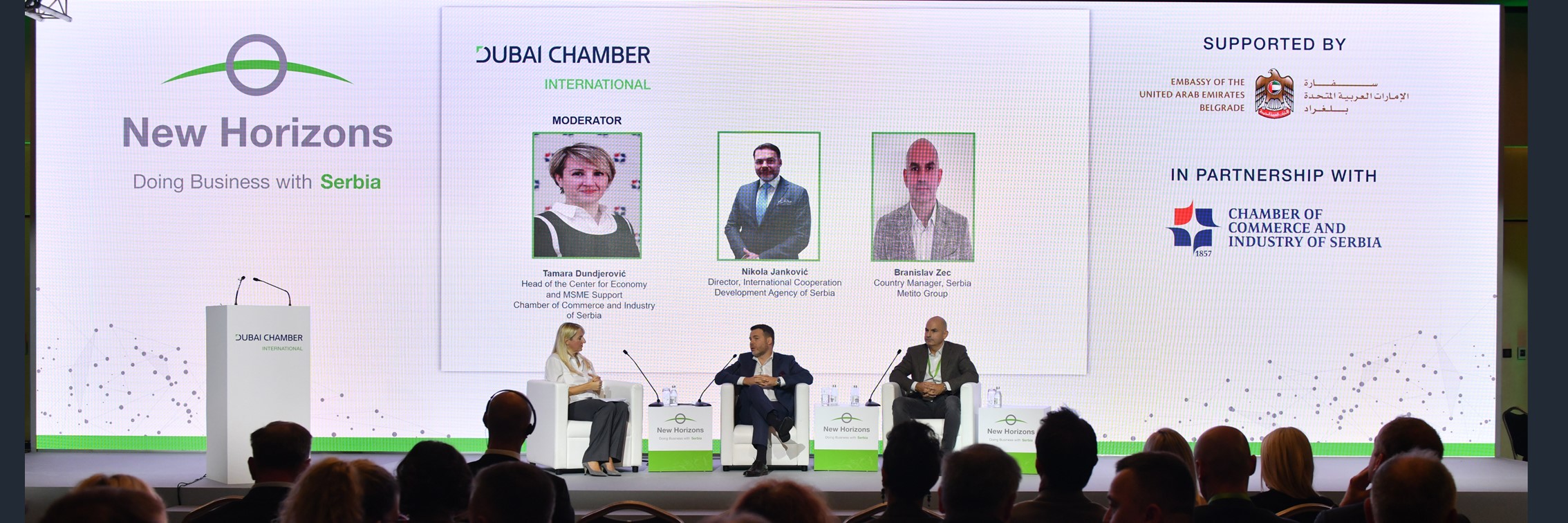
Metito inks historic agreement to pioneer Public-Private Partnerships in the water sector in Kazakhstan

Metito, a global provider of intelligent water management solutions, has signed the Heads of Agreement with Kazakhstan Investment Development Fund (KIDF), Kazakhstan Centre for Modernization and Development of Housing and Communal Services JSC, and Akimat of Akmola region for the implementation of a transformative wastewater treatment project in the city of Kokshetau.

Signed in the Central Asia Pavilion at the 28th UNFCCC Conference of the Parties (COP28) last week in the presence of senior officials, including Kazakhstan Minister of Energy, Almassadam Satkaliyev, and Minister of Ecology and Natural Resources, Yerlan Nyssanbayev, the agreement is another key milestone in Metito’s expansion in Central Asia and marks the first Public-Private Partnership (PPP) in the water and wastewater sector in the Republic.

“Kazakhstan’s leadership is very forward-looking – President Kassym – Jomart Tokayev has stressed the importance of water security at multiple addresses throughout the year – including at COP 28 – highlighting the need for the accelerated introduction of water-saving technologies to mitigate a looming water crisis. We are honoured to partner with the government of Kazakhstan to support the realization of its water security goals through pioneering the first PPP of its kind in the Republic,” commented Rami Ghandour, Chief Executive Officer, Metito Utilities Limited.

“Partnering with top-tier global firms like Metito can facilitate investments, recruitment of skilled professionals and cutting-edge technologies, fostering the advancement and enhancement of sewage systems. Given Metito’s vast expertise across multiple countries, they can play a pivotal role in assisting Kazakhstan in its objectives related to wastewater treatment,” said Zhandos Temirgali, Acting Chairman of Kazakhstan’s national investment agency Kazakh Invest.

According to the United Nations Development Programme, Kazakhstan is experiencing shortages of water resources, with the country forecasted to face significant shortfalls amounting to 50% of its needs by 2040. Since almost all sectors of the economy depend on water, due to its deficiency in the region’s GDP water availability may decrease by 6% by 2050. Metito will be investing in the Kokshetau wastewater treatment project as a private developer and will conduct a comprehensive study and propose detailed solutions to the city and municipality.

“When it comes to developing such capital-intensive infrastructure projects, the Public-Private Partnership scheme remains to be the best formula. We are currently invested in nine PPP’s across multiple markets, and this marks our tenth partnership. We are confident that this project will become an exemplar one in the region setting a new benchmark, and we look forward to working closely with all stakeholders involved,” concluded Ghandour.

COP28 Unveils the Signing of Two Large Scale Innovative Water Projects Using Alternative Energy in Morocco

Metito Utilities and Tahliya Group sign an agreement to jointly develop two projects in Morocco.

Dubai, Dec. 5th —President His Highness Sheikh Mohamed bin Zayed Al Nahyan and King Mohammed VI of the Kingdom of Morocco signed a declaration on December 4th,2023, to develop a “solid and innovative partnership” in efforts to develop economic, trade, and investment cooperation. Following this announcement, Metito Utilities, a global investor and developer of sustainable water management solutions and climate resilient water assets, signed an agreement with Tahliya Group, a prominent UAE-based infrastructure company specializing in power generation and desalinated water production plants in Africa. Together, Metito and Tahliya intend to develop a multi-user irrigation project, by way of desalinated water, in Morrocco. The desalination projects will be powered by renewable energy.

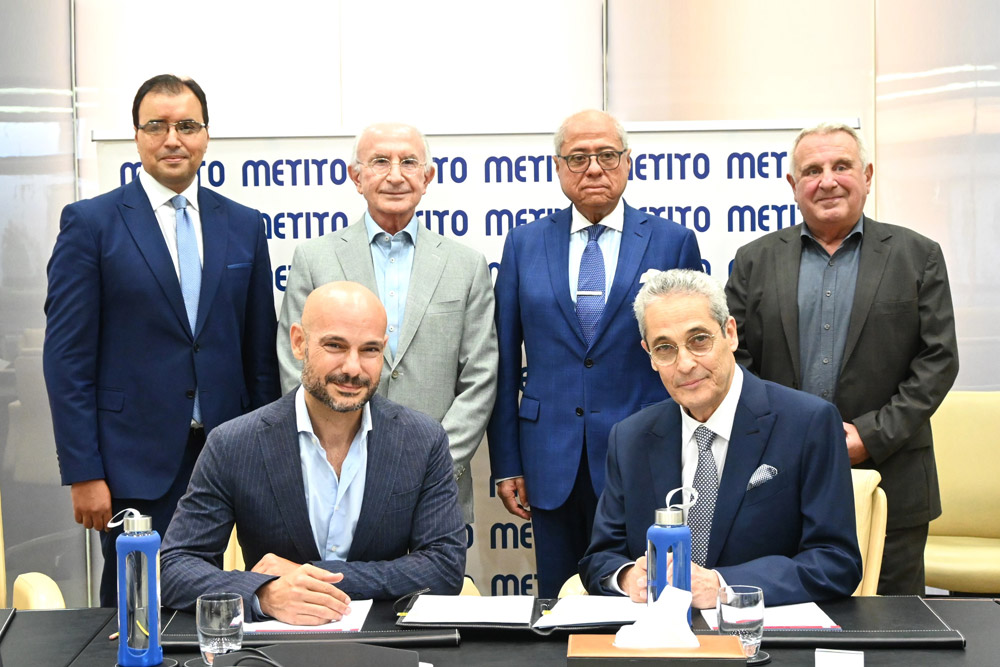
The official signing ceremony took place at the Metito’s offices in the National Industries Park in Dubai, coinciding with the 28th Conference of the Parties (COP28) to the United Nations Framework Convention on Climate Change held in Dubai, United Arab Emirates. The event was hosted by Rami Ghandour, CEO Metito Utilities and Zouheir Bensaid, the Chairman and CEO of Tahliya Group.

In response to the unveiling of this strategic partnership, Rami Ghandour expressed, “Metito’s founding principles are Impact, Sustainability, and Innovation. Guided by these principles, we are thrilled to join forces with Tahliya Group to adeptly tackle pressing issues concerning water scarcity, food security, and sustainable development in Morocco. Leveraging Metito’s proficiency in high-value engineering, coupled with our proven track record in developing large-scale desalination plants, and Tahliya Group’s expertise in infrastructure development, we are poised to establish a sustained and meaningful impact through the projects we are developing together.”  Metito has topped the global charts for being the provider of the largest desalination plants, in capacity, for 2 years in a row 2021-22 and 2022-23 as announced by the Global Water Intelligence report.

Zouheir Bensaid, Chairman and CEO of Tahliya Group, underscored the significance of both projects, “Aligned with the UN Sustainability Development Goals, Metito and Tahliya Group, will mark a new milestone in the water industry by developing alternative energy powered desalination plants at a scale, for the purpose of irrigation in Morocco.  Both companies possess all essential attributes and a shared vision that positions this collaboration as one poised for genuine impact on the communities and individuals we aim to reach through our projects. We are confident that our projects will result in substantial and far-reaching effects.”

Morocco is a key market for Metito and Tahliya which promises immense potential as an investment hub, given the nation’s diverse assets and conducive business climate. Metito will examine mobilising multiple pockets of capital and expertise to realise the planned projects, including potentially Africa Water Infrastructure Development (AWID).

Metito topped the charts again as the World Top Desalination Plant Supplier List

Awarded #1 on the 2022-23 List of  ‘’World’s Top Desalination Plant Suppliers’’

For the second consecutive year, Metito has been listed  ‘’World Top Desalination Plant Suppliers’’ by Global Water Intelligence (GWI) magazine, a leading publisher and event’s organizer for the international water industry. The list is ranked by the awarded capacity and published in GWI Magazine, October 2023 issue.

Scaling up desalination plants and optimizing operations through high-value engineering, advanced technology, and efficient management has been fundamental in Metito’s pursuit of enabling water security and addressing water scarcity. Ranking up this annual chart is a testament to the trust Metito acquired over the years as a leading provider of intelligent water management solutions and reflects Metito’s founding principles of Impact, Sustainability, and Innovation.

GWI’s Top 20 Desalination Plant Suppliers list is sourced from the GWI DesalData and International Desalination Association (IDA) – Desal Plant Inventory and is published annually. This top chart shows the leading suppliers of plants contracted since the start of 2022.

Discussions Highlighting the Role of PPPs

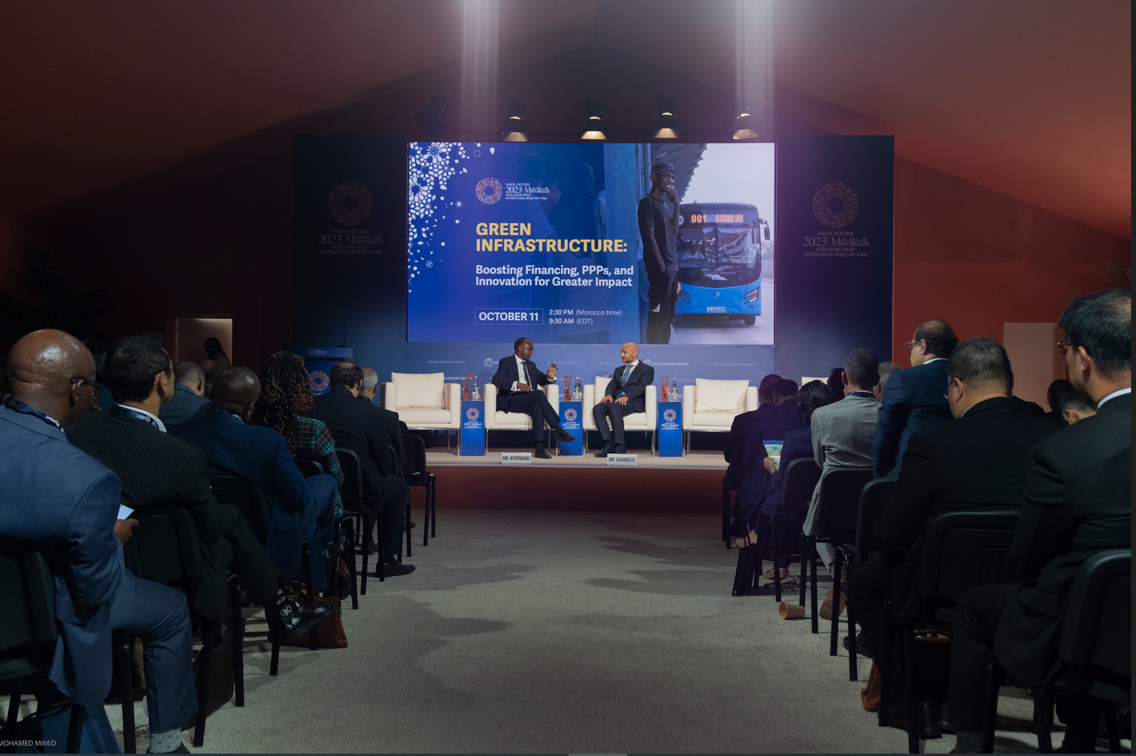
At this year’s World Bank–IMF Annual Meetings in Marrakesh, Morocco the session titled “Green Infrastructure: Boosting Financing, PPPs, and Innovation for Greater Impact” spotlighted the importance of sustainable infrastructure as a driver of economic resilience and long-term value creation. 

Rami Ghandour, Co-CEO of Metito, participated in the panel alongside global leaders to discuss the evolving landscape of infrastructure investment. The session underscored the pivotal role of public-private partnerships (PPPs) in bridging infrastructure financing gaps—particularly in emerging markets—and highlighted the enabling role of institutions such as the World Bank, IFC, and MIGA in mobilizing private capital. 

Rami emphasized the urgent need for scalable, sustainable investment in water infrastructure to address growing water scarcity challenges. He also reinforced Metito’s position as a trusted PPP partner, drawing on its strong project track record and ability to operate across complex regulatory environments. 

Metito continues to engage in strategic platforms like these to support investor confidence, unlock long-term growth opportunities, and deliver resilient infrastructure that creates impact across generations. 


Rami Ghandour interviews in Khabar TV

Rami Ghandour, CEO Metito Utilities, was featured in an exclusive interview on Kazakhstan’s national television channel, Khabar. In the segment, Ghandour shared insights into Metito’s investment strategies, highlighting the company’s commitment to sustainable growth and its role in advancing the global water agenda.

The interview, conducted in English and dubbed into Russian, showcases Metito’s approach to entering new markets with a forward-thinking and impact-driven vision.


Watch here:


Orascom Construction – Metito Consortium to Develop, Own and Operate a Large-Scale Seawater Treatment and Water Transportation Project Worth up to $2.4 Billion in the UAE

Abu Dhabi, United Arab Emirates, 24 May 2023: A consortium of Orascom Construction and Metito will, together with the Abu Dhabi National Oil Company PJSC (ADNOC) and Abu Dhabi National Energy Company PJSC (TAQA), develop, own, and operate a large-scale seawater treatment and water transportation project worth up to $2.4 billion in the Emirate of Abu Dhabi, UAE. Orascom Construction is the consortium leader.

The greenfield project will be funded through a special purpose vehicle (SPV) on a build, own, operate and transfer (BOOT) model for 30 years. ADNOC and TAQA will jointly hold a 51% stake in the SPV, and Orascom Construction and Metito will own 49% (24.5% each).

The mega project will comprise a greenfield seawater nanofiltration plant with a treatment capacity of more than 110 million imperial gallons per day (500,000 m3 /day) in addition to seawater intake and outfall facilities, pumping stations, a water transmission pipeline of approximately 75km, and an infield distribution network of more than 230km to support reservoir pressure maintenance in the Bab and Bu Hasa fields in Abu Dhabi.

The project will replace the current aquifer water injection systems used for maintaining reservoir pressure in ADNOC’s onshore oil fields, thereby ensuring sustainable water supply for ADNOC’s onshore operations while preserving the UAE’s natural aquifer resources. The project will also enhance energy efficiency by up to 30% and reduce ADNOC’s environmental footprint compared to the current injection system.

Osama Bishai, CEO of Orascom Construction, commented, “We are proud to partner with ADNOC and TAQA to deliver a project that is key to the sustainable development of the UAE’s oil and gas sector. We started our focus on important water projects over a decade ago and have since played a major role in undertaking some of the most complex projects in this sector. We are also very pleased to strengthen our presence in the UAE as we continue to target strategic projects in the region across sectors in which we have developed strong expertise. This project also plays a key role in our growth strategy to pursue infrastructure investments that provide both construction opportunities and longterm recurring income.”

Rami Ghandour, Metito Managing Director, emphasized, “The UAE established its name as the leader for knowledge-based, future-focused economic strategies and a leader in combating climate change and promoting water positivity. Being a global hub for innovations and sustainable practices, this mega project is testament of how capitalizing on technology can revolutionize industry norms and practices to best preserve valuable water resources and the environment. Over the years Metito has built a strategic project portfolio of mega concession projects and iconic world and industry firsts and we are confident this will be a landmark project and a global milestone. We are honoured to be part of this.”

Orascom Construction PLC is a leading global engineering and construction contractor primarily focused on infrastructure, industrial and high-end commercial projects in the Middle East, Africa, and the United States. The Group also develops and invests in infrastructure opportunities, owns 50% of BESIX Group, and holds a building materials, facility management and equipment services portfolio.

Orascom Construction has been executing its strategy to build, own and operate projects in the water and concessions sectors, and has been strengthening its leading position as a key player across the region.

Most recently, the Group completed some of the largest projects in the water treatment sector worldwide such as Bahr El Baqr Water Treatment Plant in Egypt, the largest in the world with a capacity of 5.6 million m3/day, and Abu Rawash Wastewater Treatment Plant in Egypt, one of the largest in the world to be executed in one phase with a capacity of 1.6 million m3/day.

In addition, the Group is the co-owner and co-developer of Egypt’s first PPP project, New Cairo Wastewater Treatment Plant, and Saudi Arabia’s first Independent Sewage Treatment Plant (ISTP) project, Dammam West ISTP. Orascom Construction is dual listed in the UAE and Egypt (Nasdaq Dubai: OC; EGX: ORAS).


‘’Best Utilities Project” Award – Namangan Wastewater Treatment Plant, Uzbekistan

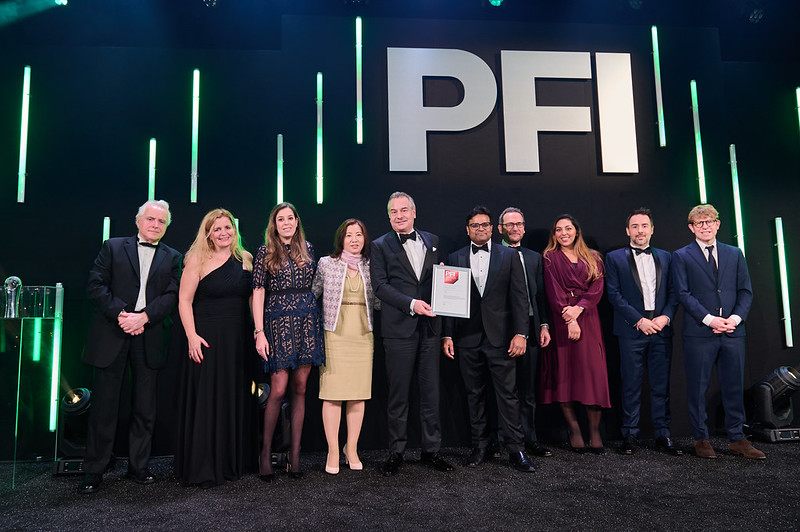
The Namangan Wastewater Treatment Plant (WWTP), the first of its kind in Uzbekistan’s water sector, has been awarded the prestigious “Best Utilities Project” at the London Partnership Awards. Developed under a public-private partnership (PPP) model by Metito Utilities, this pioneering project marks a major milestone in the country’s sustainable water infrastructure journey.

Since 2017, Uzbekistan has been driving a bold economic reform agenda aimed at accelerating sustainable infrastructure development by engaging the private sector and attracting foreign direct investment. The Namangan WWTP stands as a flagship project under this agenda and has gained global recognition for its potential long-term impact.

Located 295 km from Tashkent, the Namangan WWTP is expected to significantly improve water and wastewater infrastructure in the region. The project plays a key role in encouraging more foreign investment in essential infrastructure, creating employment opportunities, and improving access to clean water and sanitation services.

This award reflects the success and importance of Uzbekistan’s PPP program, which government officials have described as a turning point in the country’s development.

Metito Utilities participates in the Tashkent International Investment Forum

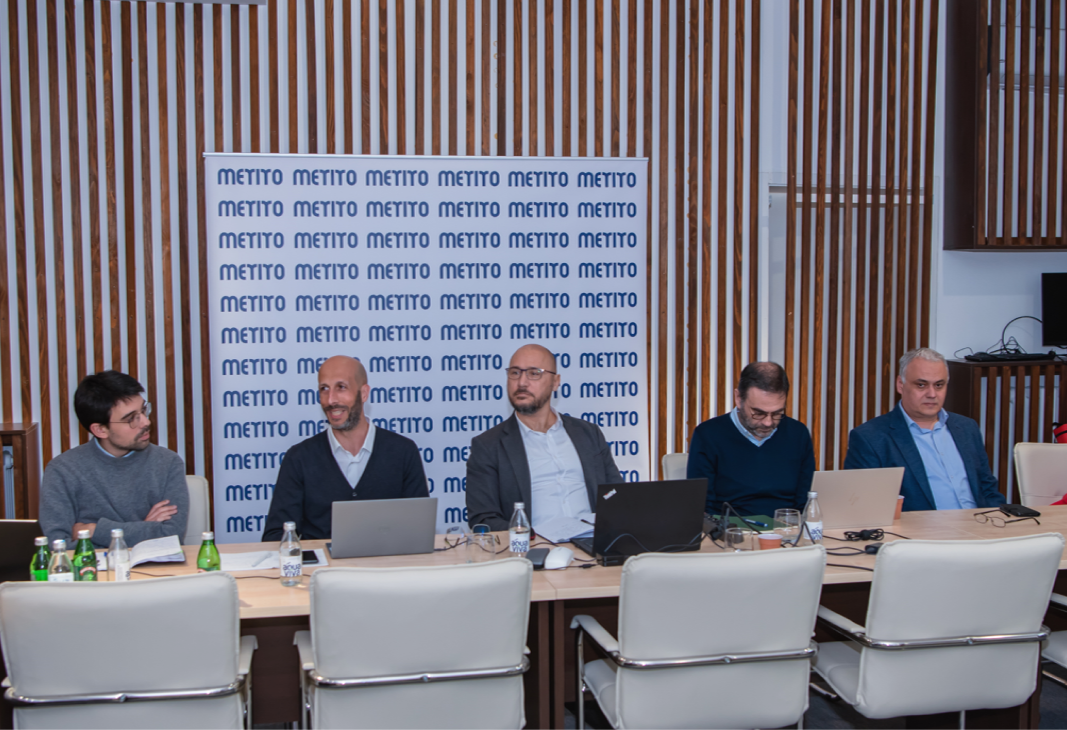
Rami Ghandour, Managing Director of Metito, participated as a speaker in the panel discussion titled “Private Investment in Infrastructure Development” at the Tashkent International Investment Forum in Uzbekistan.

Held on the first day of the forum, the panel brought together leading voices from the public and private sectors, including:  Peline Atamer, Head of Programme SIPA – Central Asia, OECD; Sarvar Khamidov, Deputy minister, Ministry of Investment, Industry and Trade; Muneer Ferozie, IFC Manager for PPP, Middle East, Turkiye, Central Asia, Afghanistan, and Pakistan; Chahine Boutouila, Head of Veolia Central and Eastern Europe in Uzbekistan; John Hyman, Senior Investment Adviser, Uzum Market; and Baghdad Amreyev, President, Turkic Investment Fund.

Discussions focused on the critical role of infrastructure investment in driving GDP growth, creating enabling regulatory frameworks to attract private investment, and aligning infrastructure development with urbanization goals to ensure long-term investor confidence.

Metito’s participation in the panel reflects its ongoing work to support sustainable infrastructure development and collaborate on public-private initiatives across Central Asia.